
A HISTORY OF
THE CARRIAGE HOUSE
Charleston, South Carolina
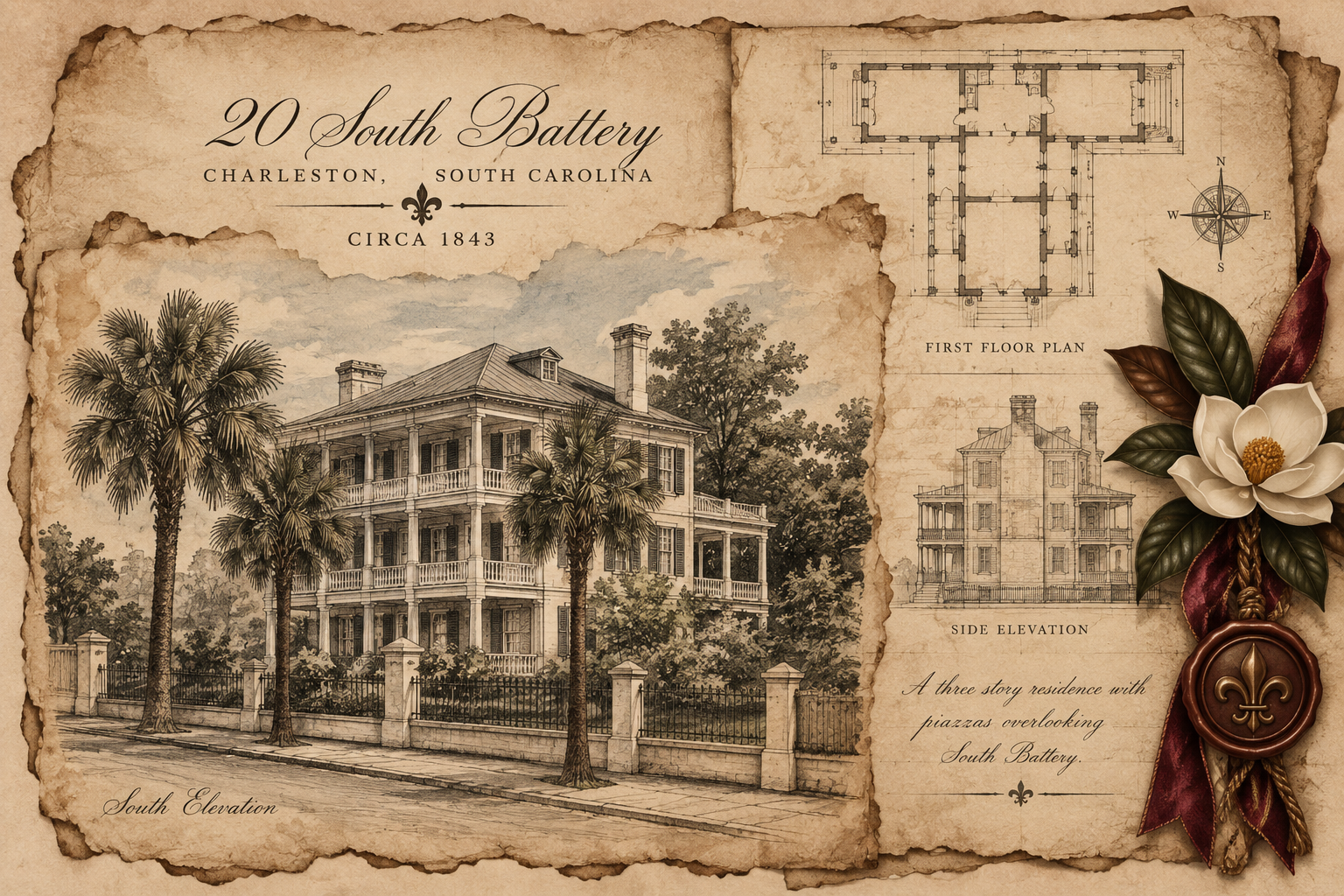
Built along Charleston’s historic Battery in 1843, the estate at 20 South Battery has witnessed nearly two centuries of change—from its antebellum beginnings and Civil War survival to Reconstruction, preservation, and generations of life within its walls.
EST. 1843 ✦ CHARLESTON, SC

THE DEED OF 1843
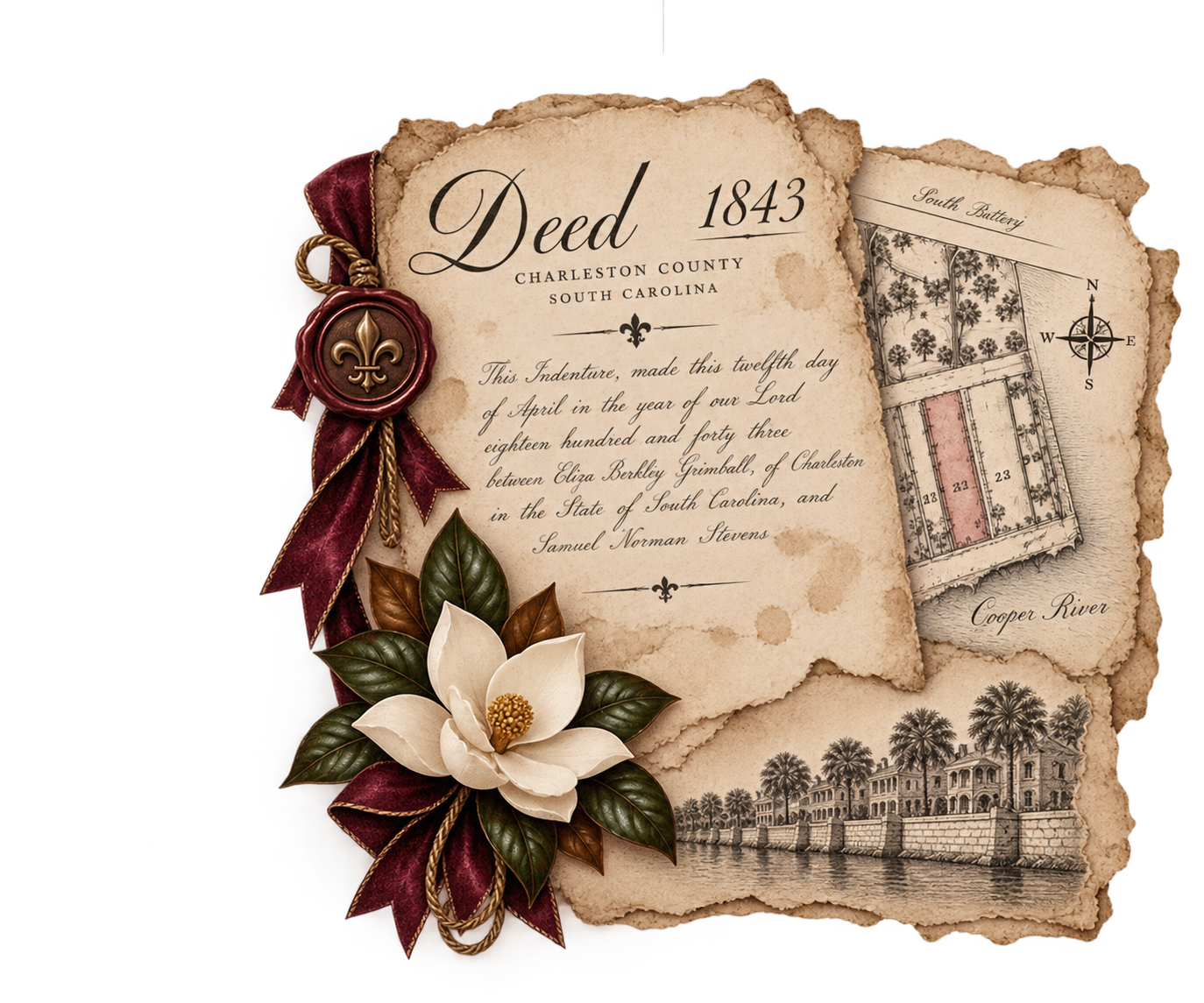
The 1843 deed marks the transfer of the southern portion of the Grimball property to Samuel Norman Stevens, establishing the parcel that would become 20 South Battery.
With the property now under separate ownership, the site entered a new chapter—one that would shape the residence, grounds, and identity of the estate for generations to come
CHAPTER I
BEFORE THE
GHOST STORIES
Long before the stories attached themselves to the Carriage House, this ground belonged to another Charleston home—and another family.
THE GRIMBALL PROPERTY
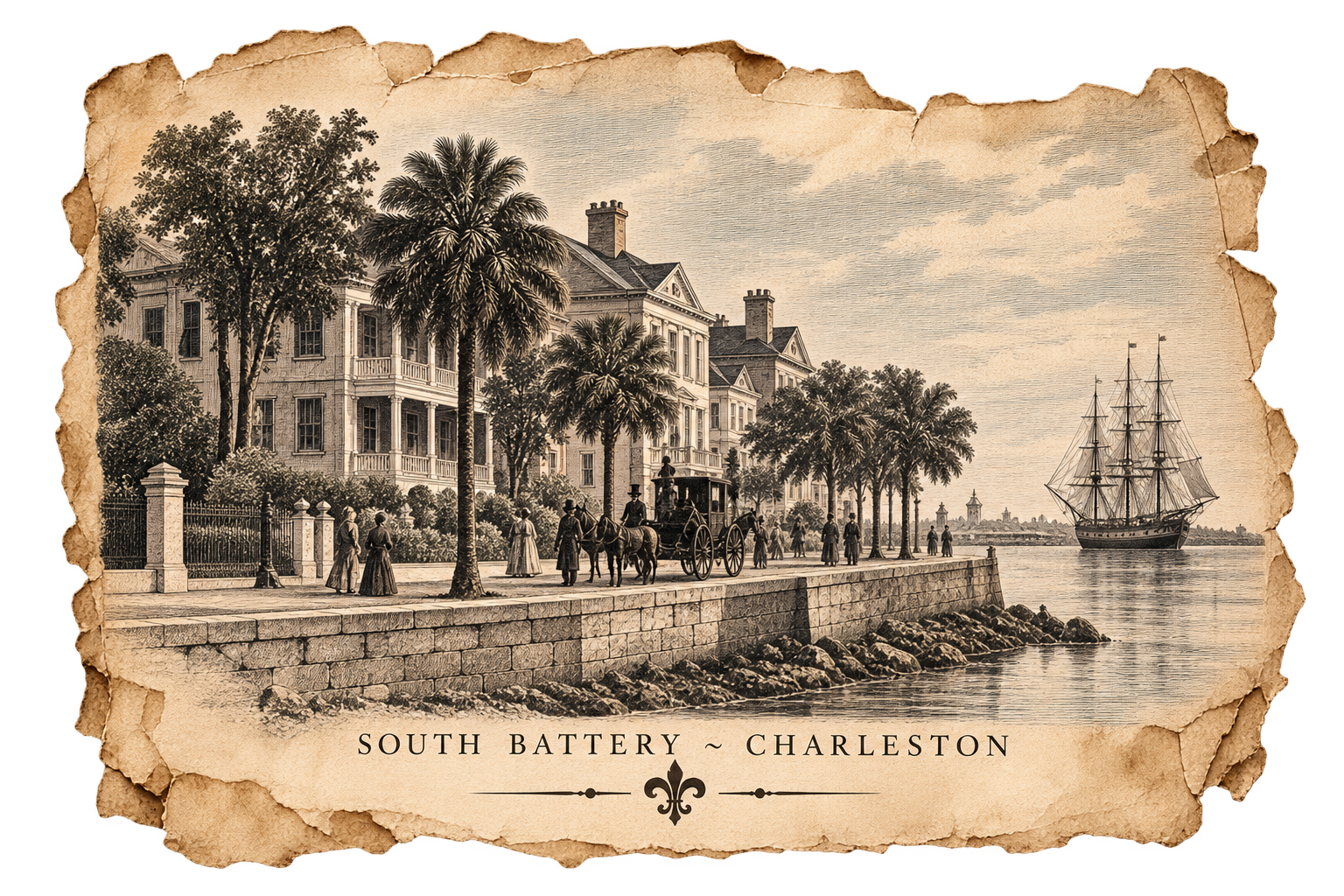
Before 20 South Battery existed as a separate estate, the land formed part of a larger waterfront property associated with John Grimball and Eliza Berkley Grimball. Their residence stood next door at what is now 22 South Battery, overlooking Charleston’s prominent harbor landscape.
1843 — THE ESTATE BEGINS
In 1843, Eliza Grimball sold the open southern portion of the property to Samuel Norman Stevens, a prosperous Charleston factor and shipping merchant. Stevens established a three-story residence with a T-shaped plan and piazzas facing South Battery—the beginning of the estate now known as 20 South Battery.
1843 — THE HOUSE TAKES FORM
Following his acquisition of the property in 1843, Samuel Norman Stevens established the residence that would become 20 South Battery. The three-story house was designed with a T-shaped plan and piazzas oriented toward South Battery, placing the home within Charleston’s prominent waterfront landscape.
What began here was more than a new residence. The house, its grounds, and the generations who would inhabit them became part of a much longer story—one that would continue to evolve through war, reconstruction, preservation, and changing ownership.