ENTRY 002 · THE BATTERY CARRIAGE HOUSE
THE HISTORY
Before the ghosts, there was the house.
Long before the stories became ghost stories, there was a house.
At 20 South Battery, generations lived beneath its roof, walked its halls, and left pieces of their lives behind. The history of the Battery Carriage House is layered with family, change, loss, and legacy—and for us, some of that history became unexpectedly personal. Before we explore what may still linger here, we begin with what we can know: the house, the people, and the past that shaped them.
THE HOUSE
20 SOUTH BATTERY
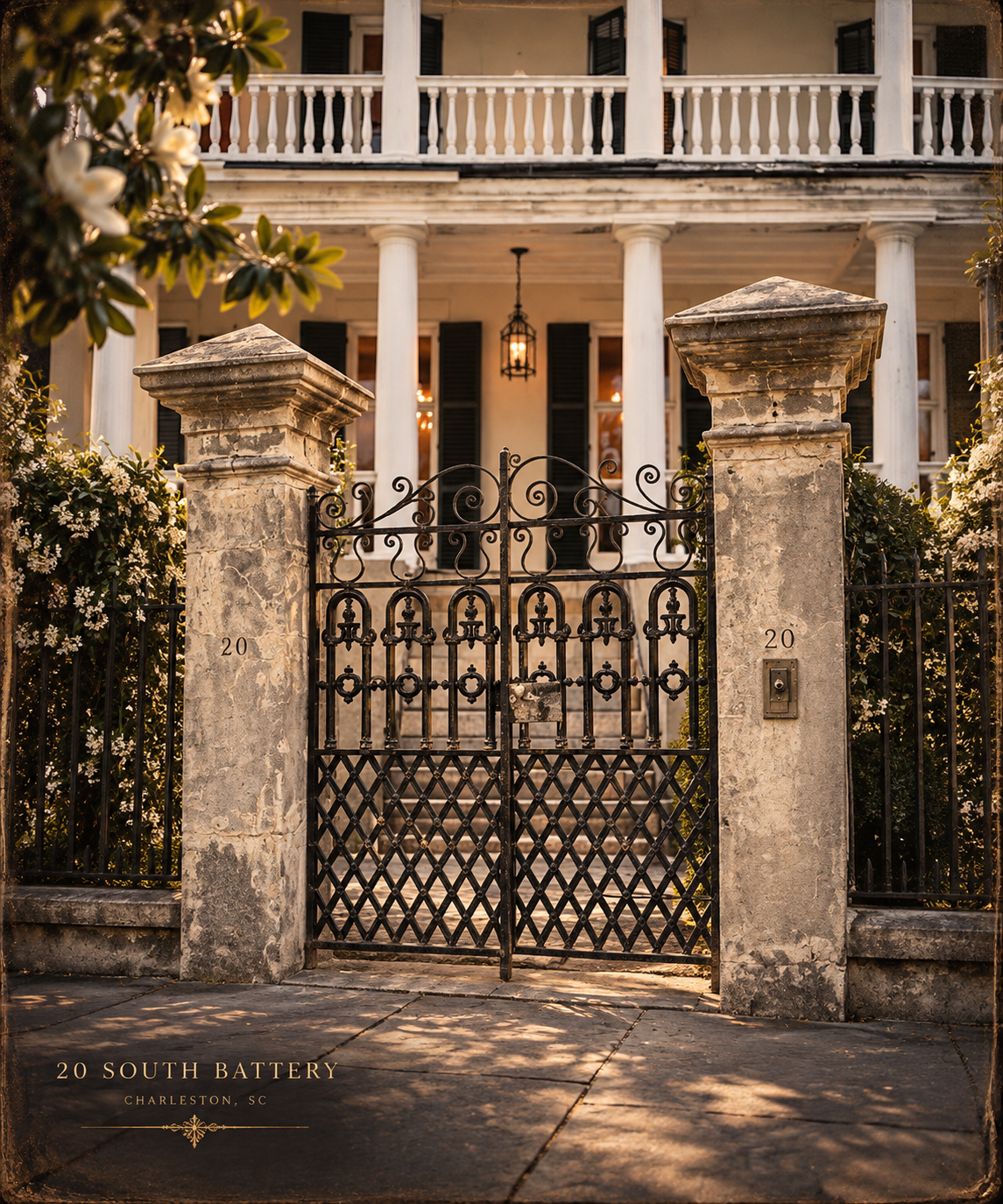
The house that stands at 20 South Battery has never belonged to just one moment in Charleston's history.
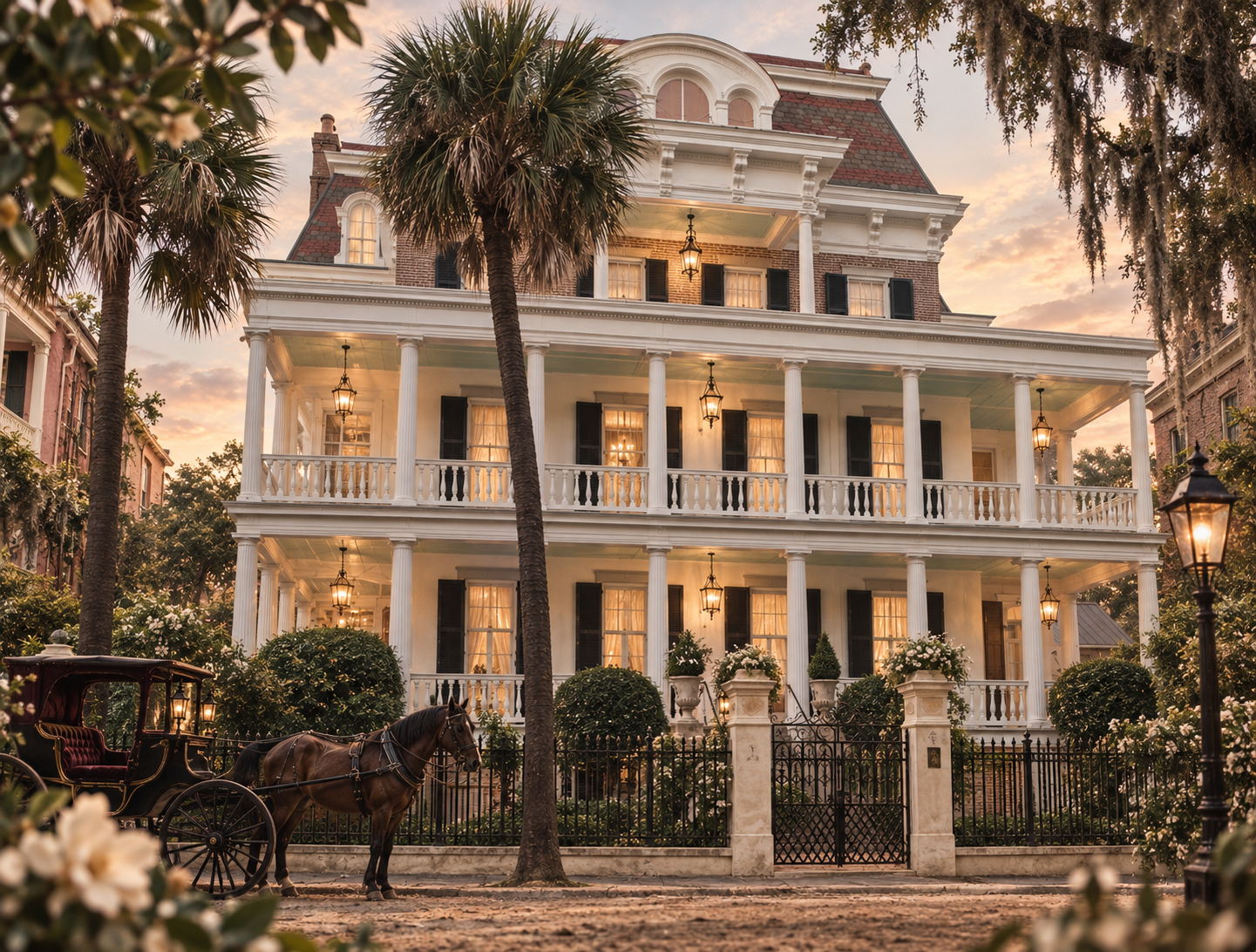
The story of 20 South Battery begins in the 1840s, when a substantial residence was built for Samuel N. Stevens along Charleston’s southern edge. Facing the harbor, the house stood within a city defined by extraordinary wealth and beauty, but also by the profound inequalities of the antebellum South.
The house visitors recognize today would emerge decades later. After the Civil War, Richard Lathers acquired the property in 1870 and commissioned prominent Charleston architect John Henry Devereux to transform it. The renovation reshaped the residence, adding its distinctive mansard roof and grand interior spaces and beginning a new chapter in the life of the house.
Through war, reconstruction, changing families and changing purpose, 20 South Battery endured. And with every generation, another layer was added to its story.
1870
THE HOUSE TRANSFORMED
After the Civil War, 20 South Battery entered a new era.
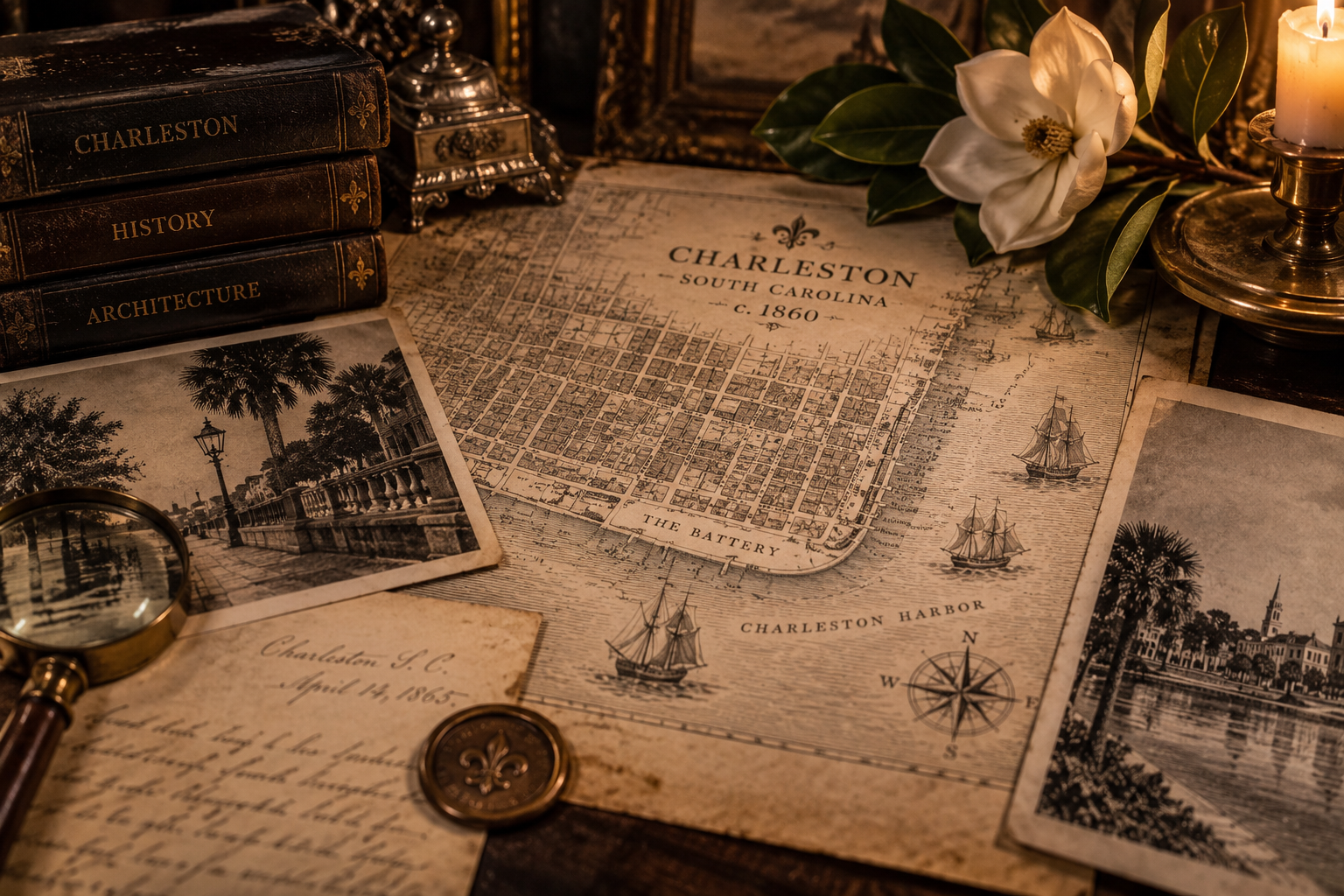
In 1870, Richard Lathers acquired 20 South Battery and began a transformation that would help create the house recognized today. In the years following the Civil War, Charleston itself was changing, and the residence at 20 South Battery was about to change with it.
Lathers commissioned prominent Charleston architect John Henry Devereux to transform the property. The renovation reshaped the residence and gave the house much of the architectural character associated with it today, including its distinctive mansard roof.
The transformation marked another chapter in a house that had already witnessed decades of Charleston history. Its architecture changed, its occupants changed, and the world beyond its gates changed with them.
THE PEOPLE
LIVES WITHIN THE HOUSE
The story of a house is also the story of the people who called it home.
Across generations, 20 South Battery was shaped not only by its architecture, but by the people whose lives unfolded within its walls. Families came and went, each becoming part of a house already carrying the imprint of those who had come before.
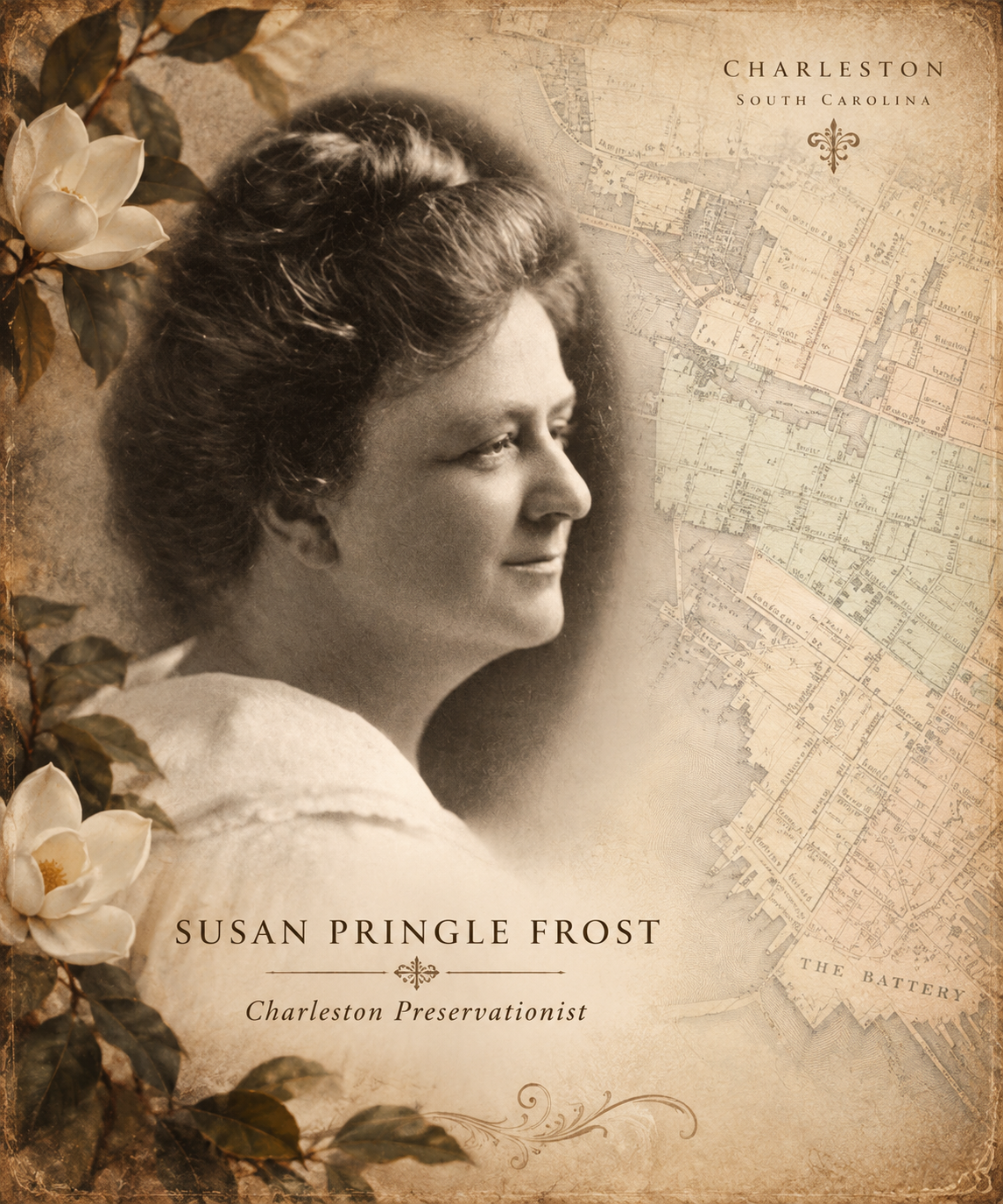
By the early twentieth century, the story of 20 South Battery had become intertwined with another chapter in Charleston history: the growing effort to preserve the city’s architectural past. Among the figures associated with that movement was Susan Pringle Frost, one of Charleston’s pioneering preservationists.
In 1920, the organization that would become the Preservation Society of Charleston was founded during a meeting at 20 South Battery. What began as an effort to protect a threatened historic building grew into a preservation movement that would help shape the way Charleston remembers—and protects—its past.
For a house that had already witnessed so much change, it was a fitting new chapter. 20 South Battery was no longer simply a place shaped by history. It had become a place where people gathered to preserve it.